Stabilization precedes performance and transformation.
Identity Architecture Model™
A structured model for mapping how identity forms, functions, and responds to disruption.
.png)
What you experience is not random.
It follows structure.


Making the Invisible Measurable
The Identity Architecture Model provides a structured way to understand:
-
how identity is formed
-
how disruption impacts it
-
and how it is expressed in behavior and performance
What feels complex becomes observable when structure is understood.

The Layers of Identity
Identity operates across multiple structural layers:
-
foundational memory and meaning
-
conditioned beliefs and patterns
-
present awareness and decision making
-
future orientation and direction
These layers interact continuously.
Disruption in one layer affects the whole.




When Structure is Disrupted
Disruption does not only affect emotions.
It impacts how identity holds and functions.
This may appear as:
-
loss of clarity
-
changes in behavior
-
decreased performance
-
internal inconsistency
What looks like change is often structural instability.

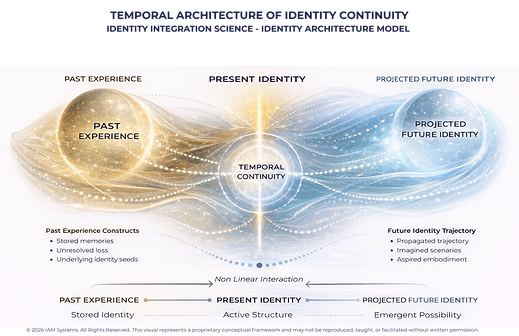
Identity Exists Across Time
Identity is not limited to the present.
It is influenced by:
-
past experiences
-
current conditions
-
future expectations
These timelines are interconnected.
Stability depends on how these timelines align.


Understanding Before Intervening
The Identity Architecture Model allows for structured assessment before action is taken.
This provides clarity on
-
where disruption is occurring
-
how it is impacting function
-
what requires stabilization
Assessment precedes stabilization.

From Structure to
Application
This model supports application across:
-
individuals navigating disruption
-
leaders operating under pressure
-
organizations managing instability
Understanding structure enables effective action.


From Disruption to
Stability
Identity moves through phases when disruption occurs:
-
Collapse
-
Reconstruction
-
Embodiment
These phases are not linear but structural
Stability is developed, not assumed.